GTM Audit: find what's holding revenue back
I spend time inside your business, then play back what's really going on, where to focus and what to do about it. You get a plan for the next 18 months that I'd be happy to be on the hook for.
For companies above $10M in revenue.
Who the audit is for
A good fit
- Above $10M in revenue, with a sales team in place
- Growth has stalled, or fast growth has started to break things
- The board wants a plan it can believe
- You're about to hire a CRO or VP Sales and want the role defined first
- You want to hear what the data says, even when it's uncomfortable
Not a fit
- There's no sales team yet
- You're purely product-led, with nobody selling
- You want someone to run demand generation
- You've already decided the answer and want it confirmed
What the report answers
Where is the business today?
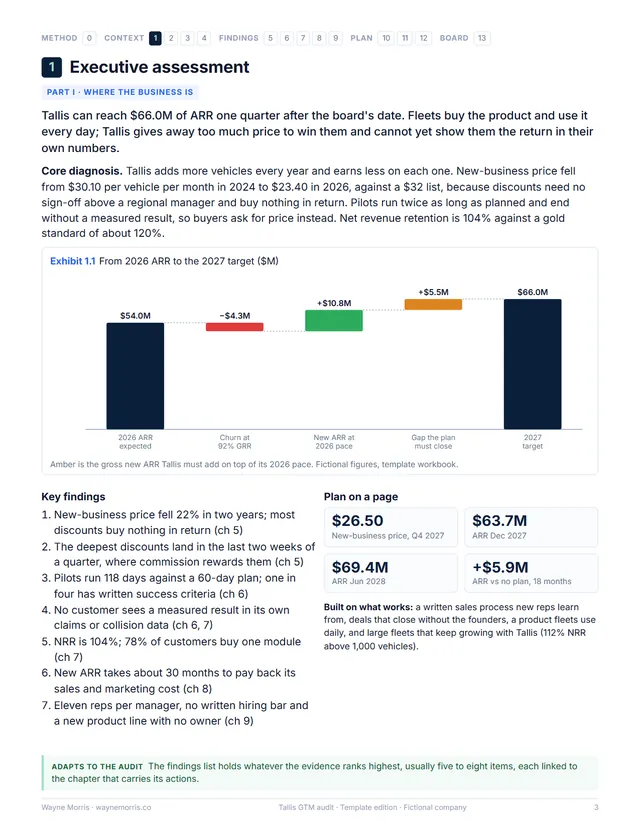
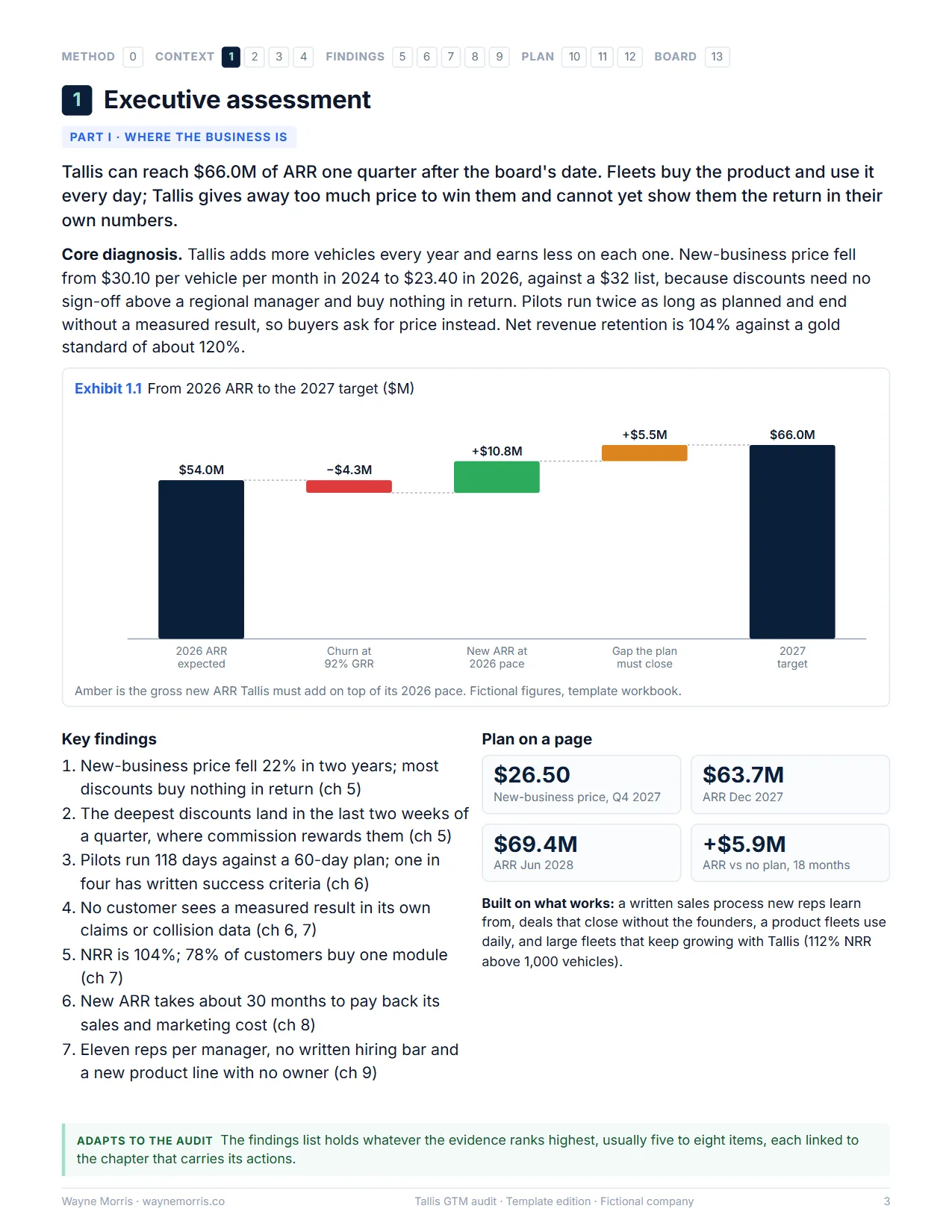
An executive assessment with the plan on a page, and the business at a glance.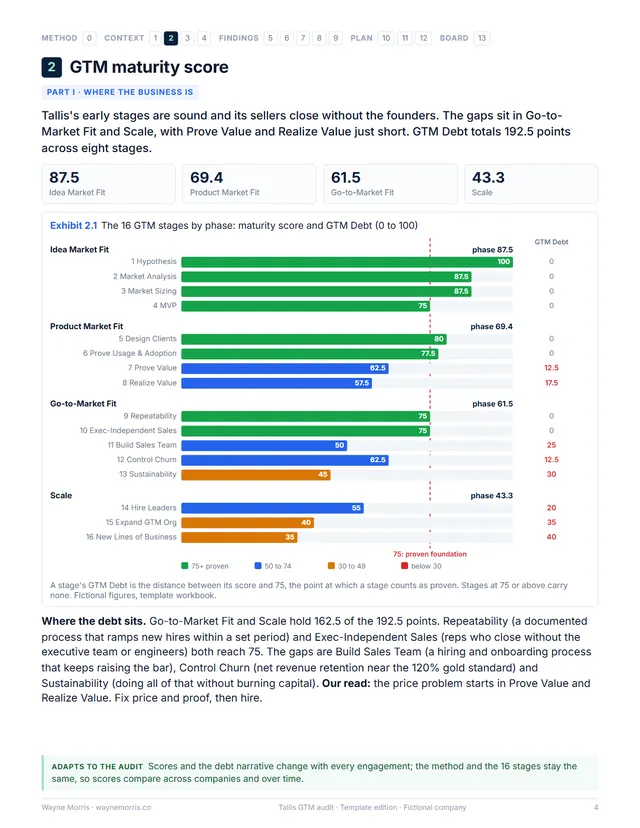
What is working?
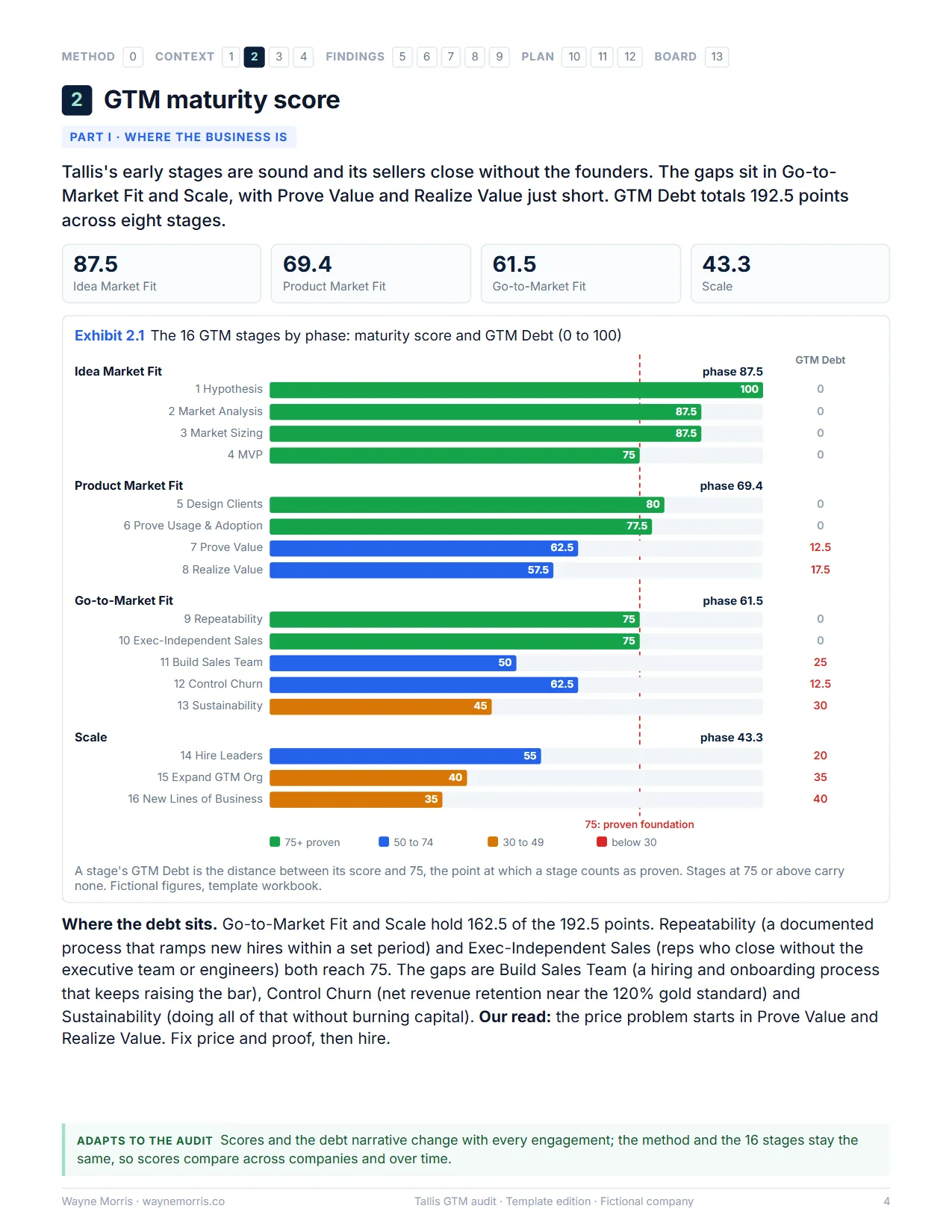
A GTM maturity score across 16 stages, with GTM Debt by stage, and a market and competitor benchmark.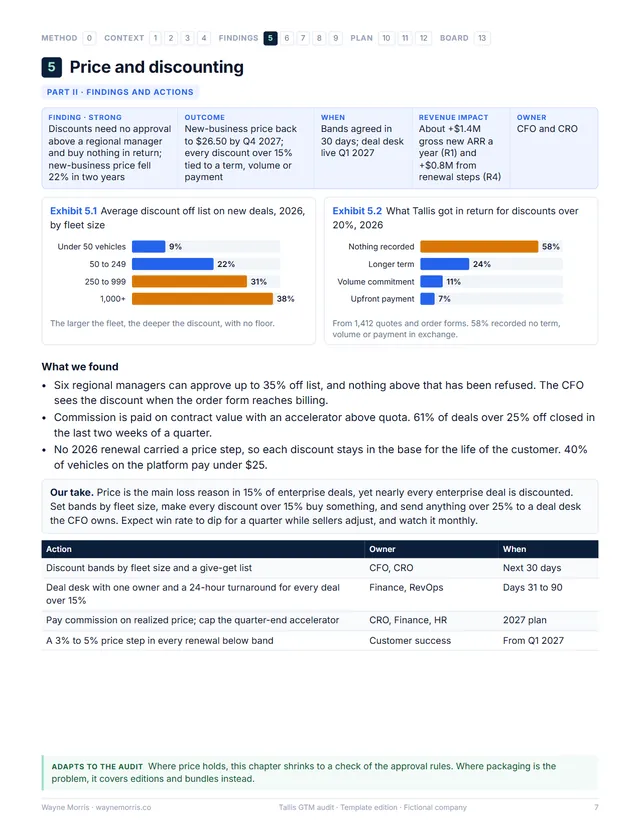
What holds revenue back?
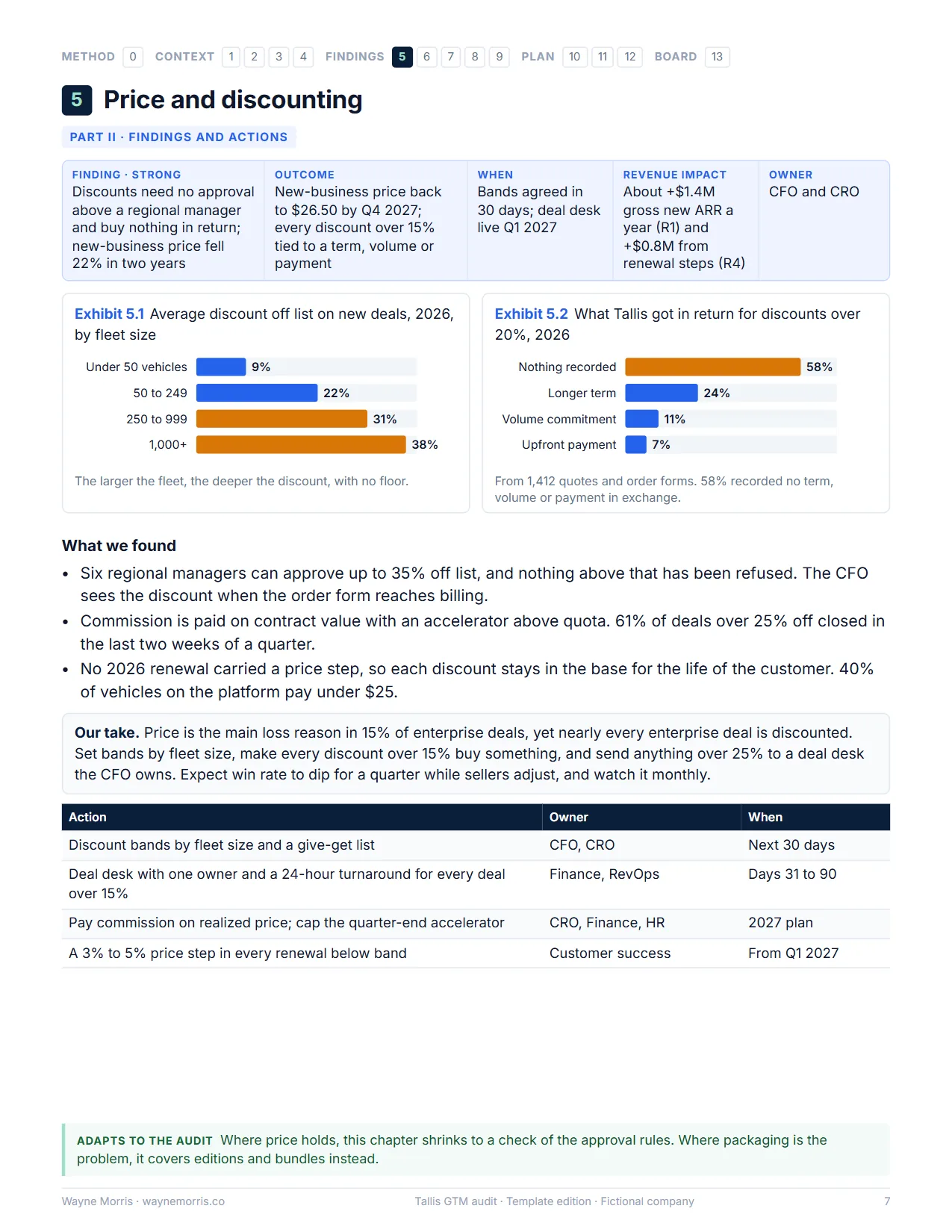
Findings and actions, each with an owner and a date, and a revenue impact where the data supports one.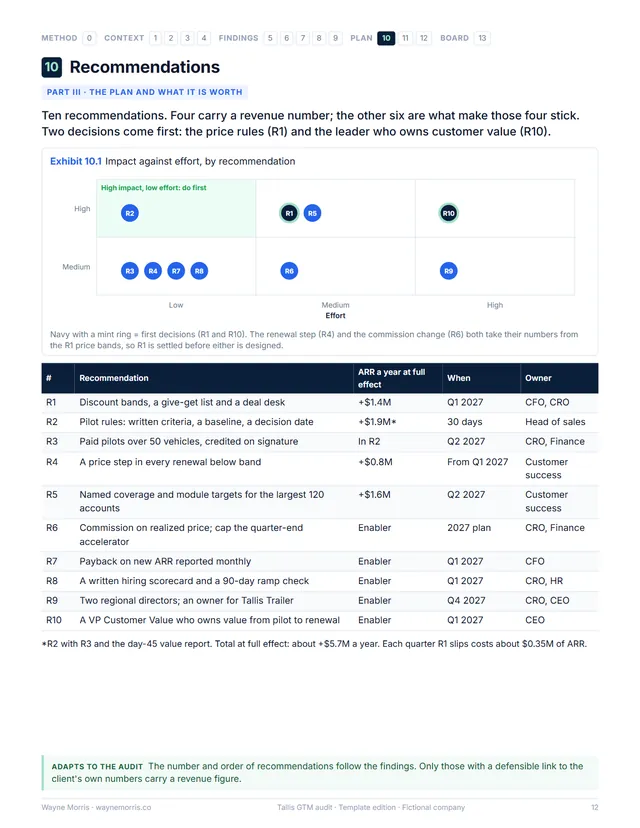
What comes first?
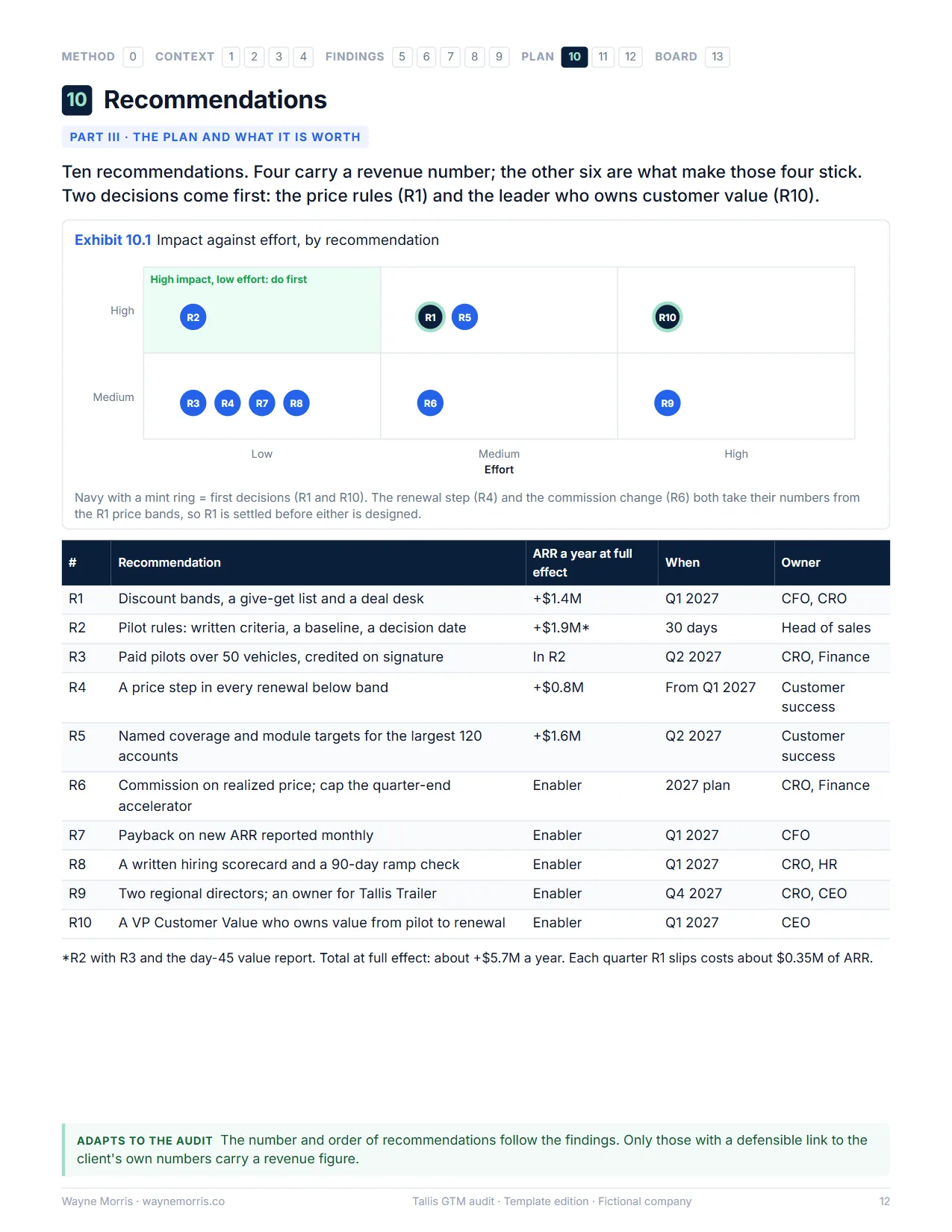
Recommendations ranked by impact and effort, with the decisions only the CEO can make at the top.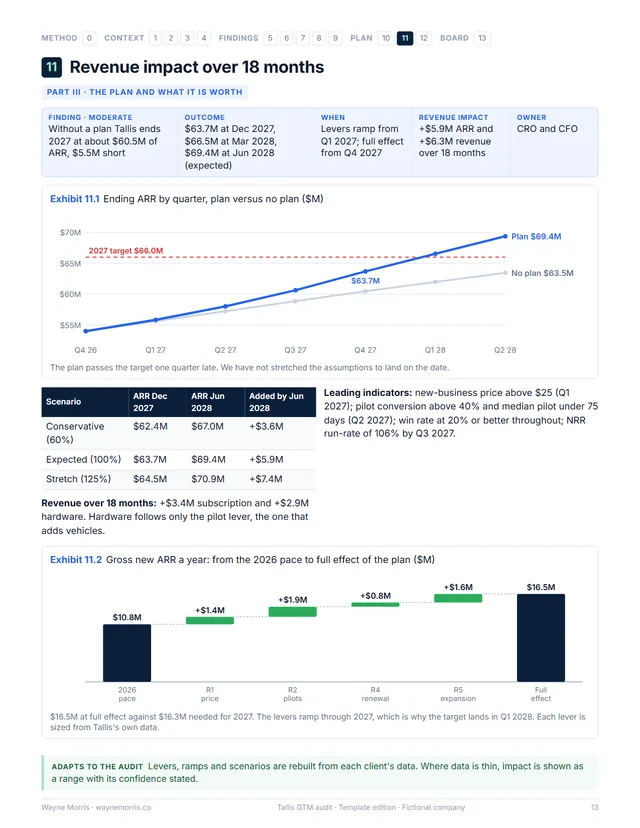
What is the plan worth?
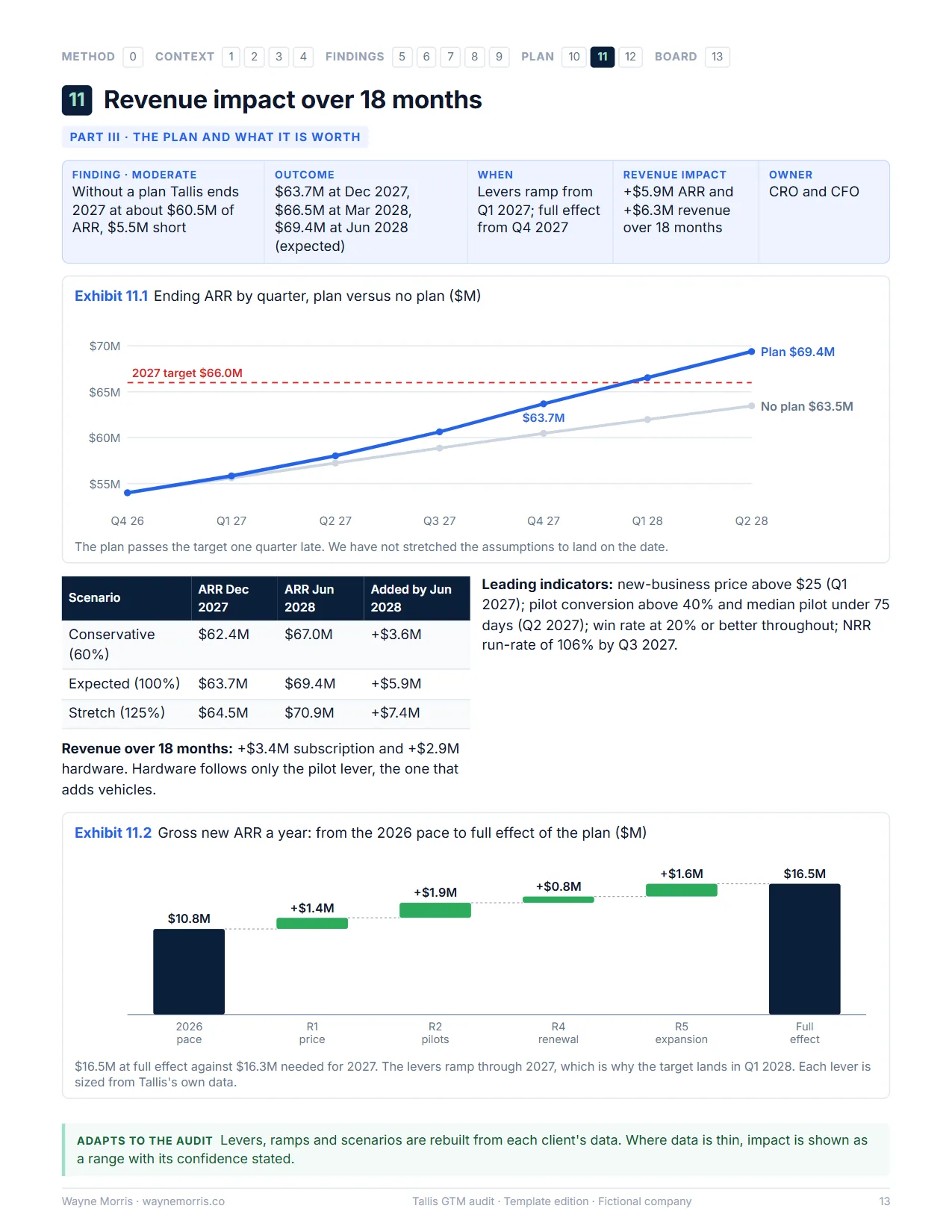
Revenue impact over 18 months, in three scenarios.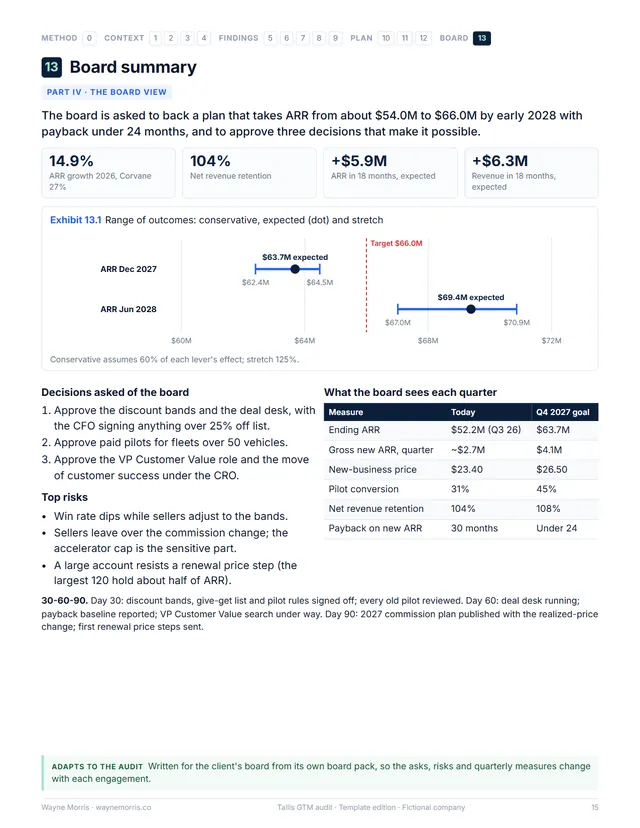
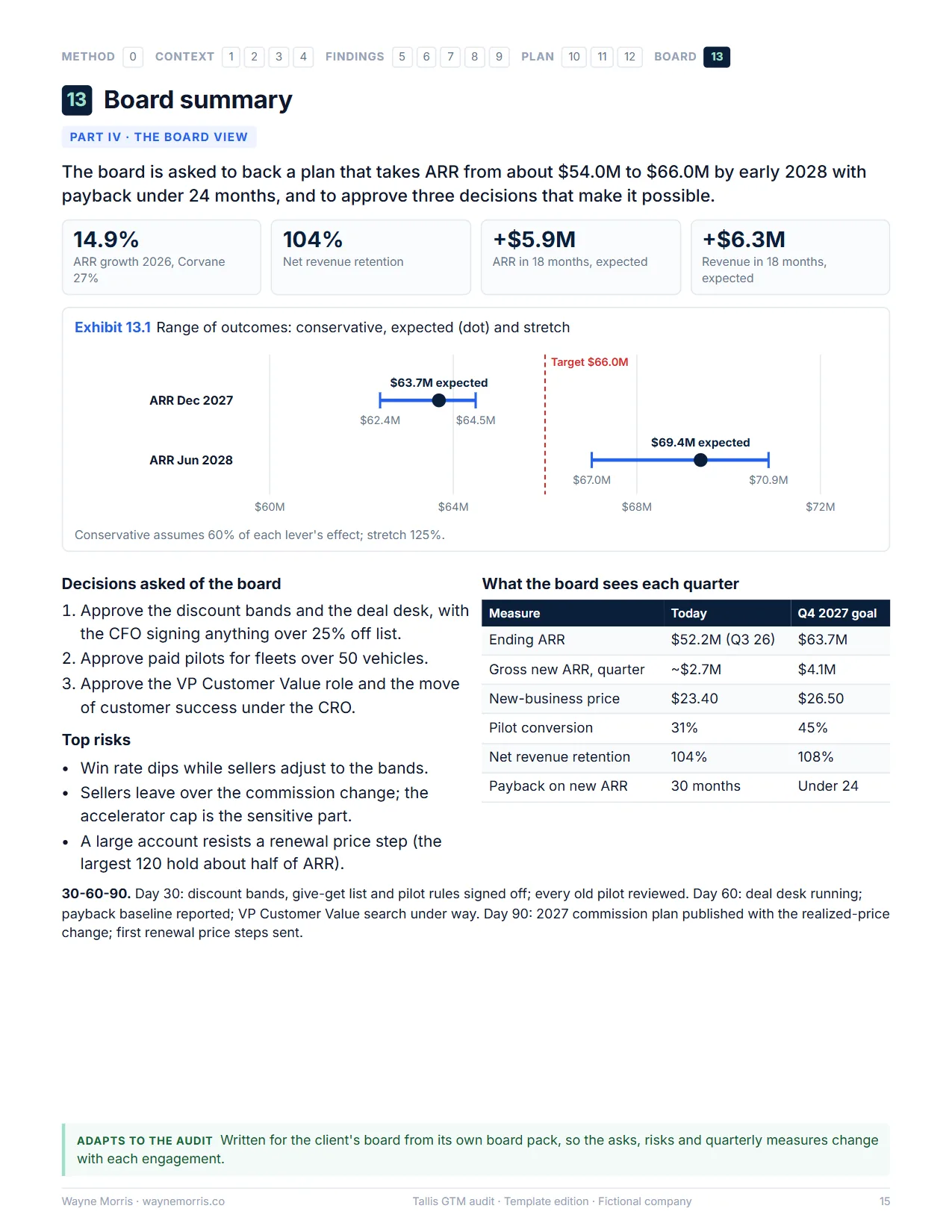
What should the board approve?
A phased roadmap with exit criteria, and a board summary with the decisions asked of the board.
Read every page onlineDownload the PDFDownloading. The last page says how to book a call.
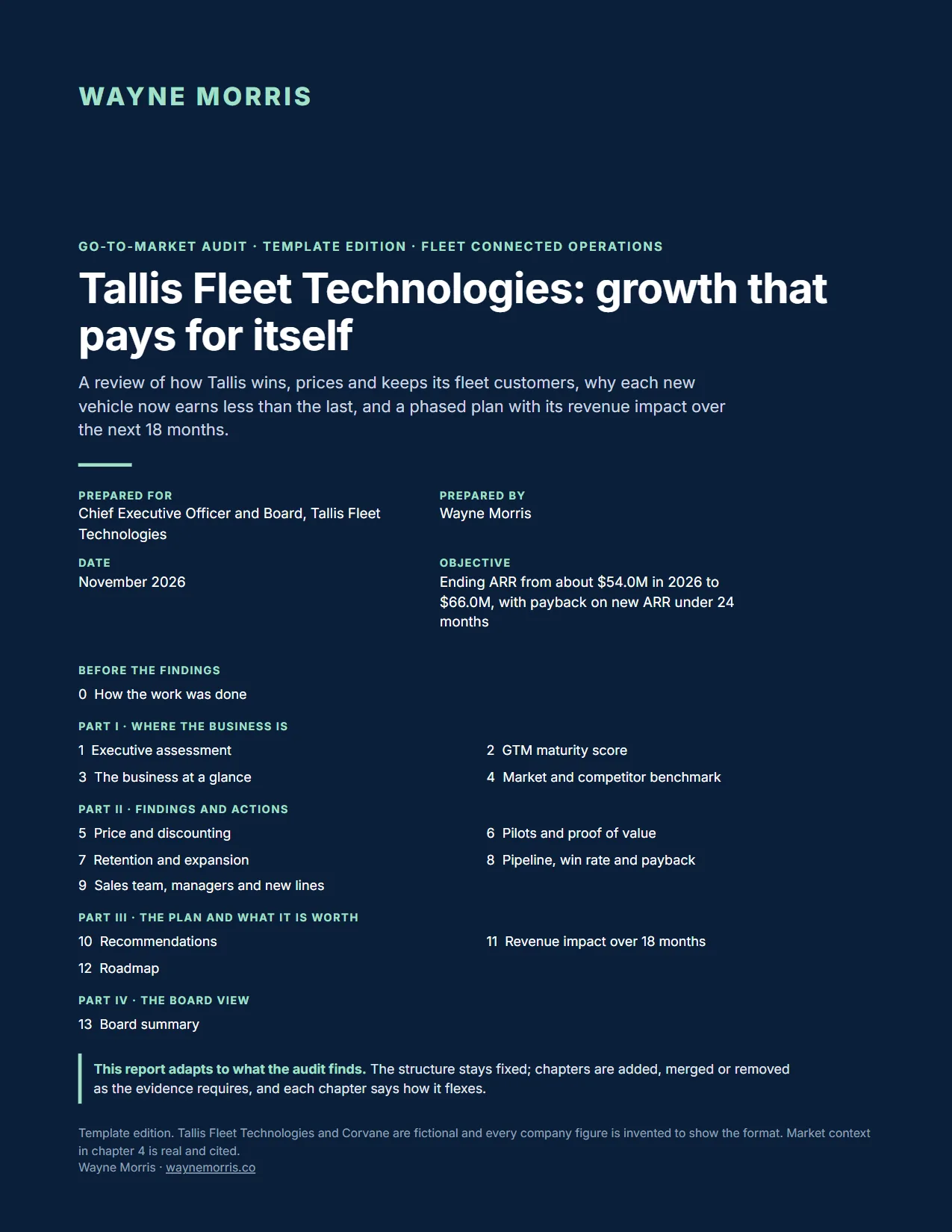
Tallis Fleet Technologies is a fictional company and its figures are invented. The format is the real one.
The interviews
This is where most of the work goes. I read your data first, so the story I'm told doesn't steer me. Then I talk to your people.
- 77detailed questions, the same for every company, so every score means the same thing
- 30 to 45minutes with each person. It feels like a conversation, but every question is planned.
- Recordedand transcribed, every interview, so nothing rests on my notes
- Allyour CRM records and call recordings read, not a sample
Who I talk to
- You, and every member of the leadership team
- Your sales leaders, and the reps who carry a number
- Marketing, customer success and finance
- The people who disagree with you
Is an audit the right first step?
Fifteen minutes is enough for me to tell you whether it is, and what it would cover for your business.